Picture of dog holding a book in its mouth.
  • Ellen Willott

    Étoile is an Amazon Prime series about the New York and Paris ballet companies’ attempt to resuscitate the dying dance. To drag ballet into the modern day, the heads decide to swap star dancers, conductors, and choreographers for a season, all the while playing up to the media and sheepishly receiving funding from power-hungry businessman, Crispin Shamblee.

    The series is made up of eight hour-long episodes. I love hour-long episodes, and the full commitment to the world that they signal. The gorgeous cinematography features long, swooping shots and some kind of camera lens that I don’t have the expertise to name, but everything feels textured and bright, far from the glossiness of your hit Netflix show.

    This is a show unabashedly about ballet, in all its beauty, elitism, fierce competition, and history. Dancing makes up whole sections of an episode, a reminder of why they’re there, collectively losing their minds. Étoile luxuriates in the fullness of it all. The scale matches that of a ballet show. There is a huge cast, grand buildings, fabulous costumes. The velvet curtain rises to credits as if you too are in the audience, but you also get the whole scale, in that you see the stage mopped once the show is over.

    The claustrophobia of the company buildings is obvious when the show escapes it. You’re on an organic farm, then on an activist boat that’s trying to sabotage a fishing boat, then a homecoming dinner put on for everyone except the daughter coming home. Sitcoms can create this eerie impression that there is nothing beyond the place it is set. Étoile doesn’t block out the world that is most of the characters’ entire world, even as they struggle to escape its orbit and reel at the ridiculousness of it. It is only as the series reaches its culmination that the focus and characters are drawn to the buildings to the exclusion of all else, circling it like moths to a flame.

    At the same time, the show is very, very silly. A bull becomes the star of the show. Cheyenne, a fought-over ballet star returns to the company directly from a smelly fishing boat, making everyone she talks to gag. A costume designer blames the bagels of New York for the incorrect distance between a recently-returned dancer’s nipples. Cheyenne talks to her boss’ crotch in a bar late at night then wins an argument with a dolphin impression.

    Having watched the first episode, whose opening scenes pan over the cleaner’s daughter practising spins in the moonlight of an empty dance room, I expected a sincerity to emerge once the plot got going. But the show is almost relentlessly irreverent to the point that it starts to get a bit monotonous, which is surprising and even impressive, given the sheer amount of tomfoolery packed into every minute. By the end of the third episode, the arguing gets boring. Everyone is always yelling at each other. A certain amount of endearment is needed to gel it together, and raise the risk of it all going wrong. It’s hard to like any of the characters when they’re too busy being caricatures.

    The slapstick is often great. Posh professionals misbehaving, suddenly sprinting away from a party, and manhandling each other down corridors is funny when played utterly deadpan. There is an absurdism that at times veers towards the surreal, such as when the head of the New York company tries to find Mr Shamblee in a restaurant, only to be confronted by customer after customer with Shamblee’s face. It is revealed not to be a stress-dream, but that Shamblee has commissioned sophisticated prosthetics to protect his security as an infamous man in public. It’s a good representation of how it feels to watch the show. The show is grounded in reality visually and contextually, and is simultaneously completely unreal.

    As you move into the second half, sincerity dribbles in to give much-needed relief from the silliness. It is all the more effective because by this point, you will take any crumbs of wholesomeness. The cataclysmic relationships between the huge personalities of Tobias, Gabin, and Cheyenne give way to understanding and warmth, bonded by their unassailable love of ballet. While sparks fly between them, other flames are slowly fanned out as Nicolas contemplates a life without ballet, and his colleagues rail against the thought of ballet without him.

    In Étoile, the melodrama of ballet seeps into everything around it. The performances on and off stage are bold and ridiculous and sincere. By the end, you are held in its thrall, holding your breath as the curtain rises. You just have to grit your teeth through the second and third episodes.


  • Ellen Willott

    Tell Me Everything is a story about stories. It is a meandering contemplation of the way that people push blindly against the solipsism of their minds to find sparks of connection, briefly illuminating the unknown and each other.

    Tell Me Everything follows Bob Burgess, a lawyer, and Lucy Burton, a semi-famous author, in a Maine town just coming out of the pandemic. Strout weaves together the many stories that pass between them and other villagers as the they assess their lives and marriages. When a man is accused of a crime, questions around guilt and hidden pasts intensify.

    It is a story about how people can be lonely in well-meaning, supportive relationships and friendships, estranged from people who have known them half their life. Tell Me Everything asks to what extent we can ever know another person. How much is our understanding of others a projection of them in our mind’s eye? Is a feeling of connection nothing more than the feeling of coming into a version of yourself?

    The book is as gently funny as it is gently sad. Like its characters, it doesn’t take itself too seriously, but between lines of dialogue and walks in the park, a melancholy leaks in, a sense of uncertainty and searching.

    Something that stood out to me is that most of the characters are onto their second or third marriages. Normally confined to one or two characters for realism or as an indication of character, I looked to the remarriages as some kind of smoking gun. What at first struck me as odd, an affectation or perhaps a true reflection of divorce rates these days, then came to represent a really important part of the novel. It’s a book about how everything is transitory. The majority of characters have reached an age where they have lived several lifetimes -and not in a pretentious philosophical way- just the obvious yet profound observation that we are always moving from one thing to another, even while standing still. The characters have all had other Happily Ever Afters, some of which were truly happy and some which weren’t. Most of us get several Happy Ever Afters, and therefore almost none. The characters had a full life before the book, and you get the sense that they will continue long after it ends. Strout plays with your expectation that the plot will match familiar cadences of narratives. She narrates the many small endings or ‘failures’ that we collect through life, and how the story never finishes there.

    The book also plays with how stories are meant to have patterns, points, and meanings. At one point, Lucy asks what the point of anyone’s life is, and Bob snorts, calling this an immature question. It is at once profound and childish. What separates a story from life? Is it just attention? A voice? Are there stories full-formed, waiting to be told? If we all create our own meaning, is this just an attempt to squeeze our lives into something story-shaped? Tell Me Everything doesn’t hurtle to a culmination, but rather lumps all of its stories together and has them talk to each other and about each other.

    Each story is its own thing, but they are not all made equal. Some are tried on for size and discarded, their agenda showing through paper-thin encasings. Lucy meets Olive Kitteridge, my favourite character, to take turns telling each other little vignettes of theirs and others’ lives. As often as not, Olive thinks Lucy’s stories are stupid, grasping for meaning and sappiness and metaphysical moments which take place in instants of silence. Olive’s are about people whose stories are unknown and yet quietly shocking, whole lives buried under the weight of getting on with it.

    Tell Me Everything knits together layers of stilted conversation and stories that go nowhere and odd little observations. Dialogue stops and starts, wanders and surprises itself. It’s a book about the casual tragedy and joys of normal lives.


  • Ellen Willott

    Octavia Butler is a name that keeps popping up, so I decided to read some for myself. I go in blind and choose the only Octavia Butler book in the library that’s not second or third in a series: Fledgling. Thus my choice is made.

    My first impression isn’t great. We seem to have vampires. I check the copyright page. 2014. Checks out. Sure, a vampire with amnesia makes for a good introduction to this world, the classic new-girl plot tool. But the choice tests my patience. The protagonist begins a Frankenstein-esque crawl from innocence, everything unknown except strange subconscious knowledge and instinct. Everything she does know has to be justified, every unfamiliar but mundane concept is made anew, and important information is crammed into blocks of exposition before the expositor is killed off. It’s perfectly readable, but doesn’t meet the impression my cool sci-fi class gave me.

    Then things get going. Okay, the vampires aren’t really vampires: they’re Ina, a species separate from humans which founded the human mythology of vampires. Then instead of a slow introduction to Shori’s previous life, a kind of vampire coming of age story, the characters are catapulted into the action of the book by a pacey and genuinely surprising turn of events.

    The ethics of non-monogamy makes for an unexpected theme. Blood-sucking and sexuality are entwined, giving rise to quasi-romantic and sexual relations between Shori (the protagonist) and her ‘symbionts’ (humans she feeds from). She must have several or she will kill them, yet their setup is not simple, and must be negotiated with patience and understanding. This is not a conversation I expected from a mid-2010s vampire book. Pop off. There is an interesting conversation about consent where Wright, Shori’s symbiont challenges how much a get-out clause could be classed as consent when he is already addicted to her venom. It’s an interesting conversation, but then we go back to Wright unproblematically adoring her.

    Which brings me to the elephant in the room. Shori is meant to look 10 or so, and Wright is a 23 year old man. Wright finds her on the road, asks if she needs help, pulls her onto his lap, and then, after a bit of addictive blood-sucking, they start having sex. Soon after, Shori realises that she must be much older than her appearance to humans, confirming later that that she is in her 50s. I have to assume that Butler means this to be uncomfortable. But Wright seems pretty attached to Shori even before any addictive blood-sucking, and it takes some doing not to squirm at the image of a 10 year old and 23 year old having sex. I’m yet to grasp the point that is being made, other than to vaguely challenge taboos around consent and social acceptability.

    I also get the feeling that if she were a ‘he’, and Wright a Wendy, the book wouldn’t have worked. Which feels kind of icky, and like the book is depending on the bigger/older man-smaller/younger woman aesthetic to make it palatable. If the genders were reversed, it would be an older man (in a boy’s body) preying on a younger woman, which would make it cancellable, and it wouldn’t meet the hetero aesthetic. Just saying.

    The book doesn’t go where I thought it would. From the middle to the end, Fledgling becomes a court drama. Shori goes after the people who killed her family and symbiont, not in an action-packed chase but in an extended bureaucratical scene of dialogue. And I didn’t hate it! As someone who digs world-building, I’ve found that some authors who are great at building the characters and their world can spend the last third clumsily tying up the loose threads. Action suddenly accelerates, coincidences multiply, and unconvincing surprise-solutions appear. Like Terry Pratchett. I adore his books, but plots feel like an inconvenience in the Discworld. Anyway, Butler kept world-building to the end, barely resorting to action to make it go somewhere. The plot remained thoroughly propelled by nerdiness to the end. Which, yes, meant a lot of heavy-handed exposition to the end. But I got into it.

    Race is a main theme in Fledgling. Black Ina stand out for the practical reason that they can survive for longer in daylight, the result of a recent experiment with black human DNA. This is purely a physical advantage at the beginning: it is claimed by one of the Ina that they are not racist, race being a human construct. Statements like that smell fishy, but it’s only in the second half that the hypocrisy is made explicit. They’re set up from the beginning as these oases of liberalism, concerned with the ethics of consent and claiming to renounce human prejudices. The trial exposes the reality that Shori’s mixed DNA makes her impure in the eyes of prejudiced Ina families, who resent the humans that they are meant to respect as equals in symbiotic relationships. The gap between the ideal and reality, and the way that the hypocrisy is disguised in the lies and bureaucracy of the legal system adds a gritty cynicism to the book. Which was needed. They were getting a bit insufferable. And it’s not hard to draw parallels with the virtue-signalling of the liberal world.

    All in all, Fledgling makes for a perfectly fine read. It is thoughtful and surprisingly uncliched. It’s unfortunate that it’s haunted by the ghost of the 2010s vampire craze, but it ends up in a place quite unexpected. I still need someone to explain the age gap thing to me, though.


  • Ellen Willott

    Consider Phlebas is an action-packed, cynical space opera which follows small stories against the backdrop of a big war. The first book in Iain M. Banks’ Culture series, it is ambitious, thoughtful, and very funny.

    The book opens on the protagonist, Horza, drowning in a ritualistic torture chamber filling with the excrement of those in the palace above. Strong start. None of your: 1000 names that are mostly consonants and descriptions of vast planes that have no meaning yet.

    Then, a really nice balance of exposition to ‘you’ll figure it out’ ratio. Masterfully done. Horza is passionate and cynical, emotion driven and stoic, a wonderfully complex, cocky spy who can change his body to look like anyone else’s and has poison under his nails. Sexy poison toad. Or, chameleon, more accurately.

    Horza is rescued, but things very quickly go to pot. His next mission goes astray, a diversion that leads him halfway across the galaxy. His landing on a dodgily-captained pirate spaceship adds a nice bit of texture to the inter-galactic politics and warfare, filling out the world a bit.

    It all starts feeling a bit like A Series of Unfortunate Events or the first Earthsea book when it looks like Horza is going to jump from fix to fix, barely (and somewhat implausibly) able to wriggle out of various situations which include a megaship that’s ramming itself into an ice berg, and ritualistic cannibalism on an island on an Orbital (space city) that’s about to be spectacularly blown up. To be fair though, he does not come out of either situation unscathed; it gets nail-bitingly close.

    Though of course, you know he’ll survive for as much of the book you have left. Thankfully, he reunites with the space pirate crew and his cool space lover, preventing a saga structure made up of a series of barely connected events.

    The only bit that I really didn’t enjoy is Horza’s brief captivity with the cannibal cult. First of all, this is the second diversion, the second plot turn, and I’m beginning to wonder if we’re going to get back to the pull of the main plot, or whether the whole (not short) book is going to be Horza getting buffeted by the winds of fate across the galaxy like a discarded puppet in storm Ailsa.

    Secondly, the cult chapter is bizarrely reminiscent of European accounts of indigenous American ritualistic torture. I should know, because I’m writing a dissertation about this at the moment. It’s not identical by any means, which suggests that maybe Banks doesn’t know that’s what he’s drawing on. This isn’t unlikely; one of my dissertation’s main arguments is about how early ethnography was translated into the mainstream of eighteenth-century European society as fictional stereotypes which grew further from the realities of the early accounts. But what with the canoes, the public displays of torture, severed fingers, cannibalism, and that fact that torture symbolises an increase in the community’s strength, it all felt a bit uncanny when I’ve just written a sample about the torture scenes that the popular readership were obsessed with in eighteen-century Europe. I accept that this is quite a niche experience of this chapter, but even people who can’t explicitly make that link would hear the racial (or pre-racial) exoticised undertones in the scene. In addition to the off-the-peg ‘rude society’ stereotypes, Banks adds some imaginatively unpleasant images that will live with me for a long time.

    All this is more jarring because the rest of the book’s politics are properly left wing. You’ve got two huge political powers who both think that they are the end-products of evolution: a sly mirror held up to transhumanism. Consider Phlebas problematises liberal moral interventionism which barely disguises a desire for power.

    The book ends with chillingly informational Wikipedia-style entries which summarise the war of the main story, as well as what the surviving characters went on to do. The detached voice makes it clear that both sides, now a long time ago, were both fighting for the belief in themselves as the correct branch of evolution. The final pages suddenly zoom out so that whole species become a footnote in what was seemingly a small war, relatively speaking, since only a few hundred billion individuals died. You watch as Horza goes from supporting the side with the best claim to the next stage of evolution, to none of it mattering at all. As in the next Culture book, Iain M. Banks delivers a jaded image of the inevitability and futility of war, considering the paradox of ‘warring for peace’, and prosperity giving license to meddle with the long arm of ‘secular evangelism’. Ideologies are beautiful until they are reduced to egotism and then the pragmatism of war, virtually irrelevant when it comes to guns. At the same time, the ending is very funny, as it describes in complete deadpan the various fates that befall the survivors of the story like the after-credits at the end of a Bake Off series.

    I don’t know if I’m too far down the rabbit hole of my dissertation, but this book felt a lot like an intergalactic romp through questions of societal progress. And if that doesn’t make you want to read it, I don’t know what will. (Joking. Mostly.)


  • Ellen Willott

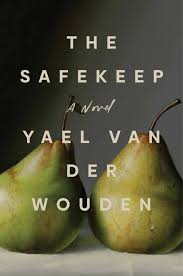
    The Safekeep, the winner of the women’s fiction prize this year by Yael van der Wouden, is a dark gem of a book. It follows a privileged and angry young woman living alone in a house that will go to her brother when he marries, and her brother’s new girlfriend who breaks through her carefully maintained monotony, repelling and attracting her.

    It’s a short book, sparsely written. The dreamy prose is full of smells and sounds as the house moves through winter to summer, fills with people, and empties again. But the gaps between lines and images also speak. The prose is as quiet as Isabella’s life, the irregularities that break through almost making you jumpy. The book is understated, full of things unsaid.

    The house is as much a character as Isabella. Everything else rotates around it, as memories echo from each room. It feels appropriate that an object is so alive and dead at once, just like Isabella and Eva at the beginning.

    When it all comes crumbling down for Isabella and Eva, and the truths start coming out of the woodwork, the effect is stunning. To find out that the house was Eva’s, before her family were sent to concentration camps and defaulted on the mortgage comes as a bright nexus of truth. It is a sudden revelation as Isabella’s peripheral knowledge corrects, clarifying the blurry gaps in her memories. The Safekeep reflects how privilege is often just that: an absence of knowledge, a protection from the world.

    The quiet anger of the book crystallises when Eva tells Isabella how the objects given or taken over during the war from Jewish families were for safe keeping. The long arms of a war are obvious when those who survive do not truly escape, those who have, protected by a wall of wilful not-knowing.

    The book ends on a note of tentative hope and healing, the characters cocooned in the house and by each other. What a book to end June on! The Safekeep is deserving of its prize.


Design a site like this with WordPress.com
Get started